
Financing for goods in motion.
How Altrus finances physical commodity trade—what we look for, how our facilities are structured, and what working with us involves.
Established traders performing real work.
We finance physical commodity traders who move real goods between identified suppliers and identified buyers—businesses that perform a genuine economic function in doing so.
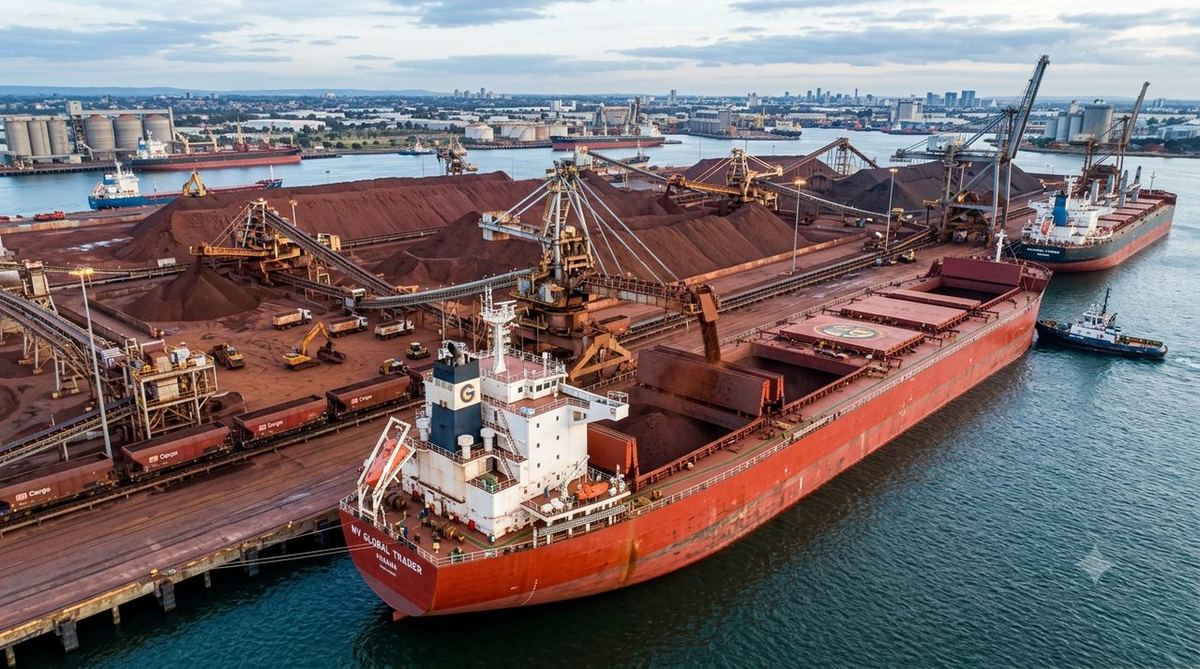
The traders we work with share a recognisable profile. They have an operating history and a demonstrable track record with their own counterparties. They trade financeable commodities—energy and coal, base and minor metals, scrap, refined petroleum products, agricultural products, cementitious materials, used cooking oil, base oils. They know their suppliers and their buyers, and can explain the commercial logic of a transaction without rehearsal.
They are selective. A trader who walks away from a marginal deal, negotiates hard on terms, and puts their own capital at risk alongside ours is the counterparty we are looking for. Our facilities are designed around that kind of discipline—and they reward it.
We finance function, not speculation.
We do not finance passive positions taken in the hope that prices move. We finance the work a trader actually performs to connect production with consumption across geography, time, and quality—wherever the transaction rests on genuine contracted flows.
Aggregation
Consolidating output from many small producers into shipment-sized lots—for example, aggregating used cooking oil from numerous collection points and selling in bulk to refiners. Small producers gain market access and freight economics they could never reach alone.
Stock-and-Sale
Purchasing in bulk and holding inventory for sale as demand arises—for example, buying base oils in bulk and supplying blenders on shorter cycles. The trader provides an outsourced inventory function the end-user would otherwise carry itself.
Processing & Transformation
Converting raw material into a higher-value, market-ready product—for example, purchasing tin ore and scrap metals and smelting them into refined ingots for export. Margin is earned through a verifiable, value-adding activity, not price direction.
Beyond these, the everyday functions of trade—arranging freight and discharge, blending components to buyer specifications, and bridging the gap between when a supplier must be paid and when a buyer pays—are exactly what make physical trade possible, and exactly what we finance.
We also finance financing arbitrage—deploying capital where it is genuinely needed and fairly priced—provided the transaction rests on a real, contracted flow and there is a sound commercial reason for the trade. What we do not finance is circularity dressed up as arbitrage: flows that exist only to move paper rather than goods.
The common thread is simple. Every facility is anchored to a genuine transaction with an identified supplier and an identified buyer, structured to repay from the proceeds of that transaction. If a deal has that spine, the economic function is real—and we can finance it.
Self-liquidating by design.
Every Altrus facility repays itself. A disbursement is made against a specific transaction with both a purchase contract and a sale contract in place, and it repays from the buyer’s payment when goods are delivered and documents accepted. No revolving lines. No speculative positions.
Ticket Scales to Cargo
We finance against the underlying cargo, not against a balance sheet in the abstract. The size of a facility follows the value of the goods being financed.
Tenor Maps to the Gap
The length of a facility follows the gap between when you must pay your supplier and when your buyer pays you. Tied to a single trade cycle, facilities are measured in weeks, not years.
Advance Ratio Governs
The proportion of a cargo’s value we advance against integrates every judgment about a deal into a single figure—structure, incoterms, buyer standing, commodity, jurisdiction, and your track record.
A tighter structure supports a higher advance; a weaker one requires you to contribute more of your own capital. That contribution is deliberate. A borrower with their own equity in a transaction loses their capital before we lose ours—which aligns our interests precisely. The advance ratio is not just a collateral calculation; it is how we keep every party’s incentives pointed the same way.
Secured, transparently and consistently.
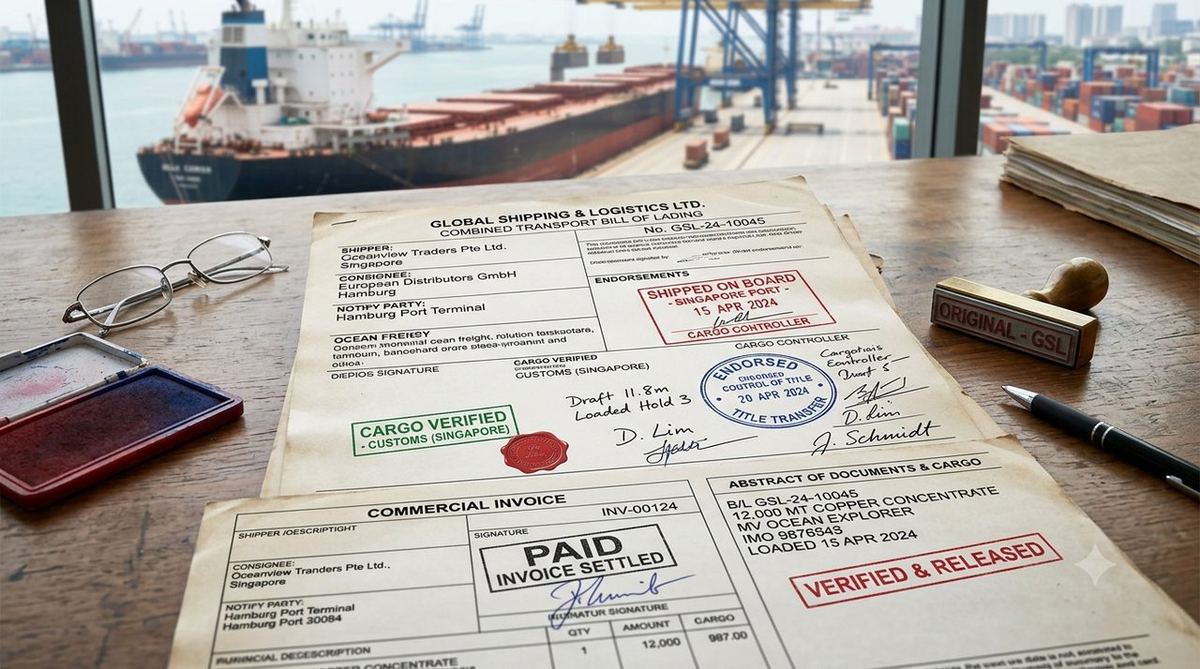
Our facilities are built around the transaction itself, so repayment is protected at every stage from disbursement to settlement. Repayment comes first from the buyer’s payment; the remaining layers exist so that a problem on any single transaction has more than one independent route to resolution.
- Bill of lading endorsed to the order of Altrus—the document of title runs to our order, so control of the cargo sits with us until the conditions for release are met
- Charge over the goods financed and the receivables—security extends over both the commodity and the proceeds it generates
- Collection account control—buyer payments flow into an account in your name over which Altrus holds approval rights over outgoing payments; loan repayment is applied before trading margin is released
- Cargo insurance with Altrus as loss payee—all-risks (ICC A) cover, so insurance proceeds protect the facility if goods are lost or damaged in transit
- Corporate and personal guarantees—recourse to the trading company and its principals where applicable
Diligence that is transaction-led.
We are less interested in reported financials in the abstract than in whether a specific transaction is sound—whether the goods are real, the counterparties genuine, and the economics hold together. In practice, a financeable transaction is one where we can satisfy ourselves on the following.
Commercial Sense
The commodity moves from a logical origin to a logical destination, at a price and on terms a disciplined trader would accept. The transaction has a reason to exist independent of the financing.
Real Counterparties
We conduct our own checks on both your supplier and your buyer—identity, standing, and track record—independently of one another, alongside your own history with them.
Track Record
Established traders with verified operating histories can access structures—such as advance payment to suppliers—that a newer relationship cannot. Track record earns flexibility.
Fitted Structures
Payment terms on both sides, incoterms, and document control are assessed as a whole, because the advance ratio reflects their combined strength.
Committed Equity
We expect you to stand behind a transaction with your own equity. A borrower unwilling to contribute meaningfully is a borrower whose interests are not aligned with ours.
Aligned, Not Adversarial
The same discipline that protects our capital protects yours—and a trader who shares it will find our diligence fast and our decisions clear.
From first conversation to drawdown.
Working with Altrus follows a clear path. What we ask of you at each stage is straightforward, and a well-prepared borrower can move through it quickly.
Indicative Discussion
You bring us a transaction—supplier, buyer, commodity, quantity, prices, incoterms, payment terms each side. We assess the commercial logic and tell you promptly whether and on what terms we can finance it.
KYB & Authorisation
We complete diligence on your business and the counterparties; you provide the corporate authorisation documents that let your company enter the facility. Most verification happens here.
Facility Documentation
We agree and execute the facility documents—loan terms, drawdown conditions, and the security package.
Security & Account
Security is put in place and the collection account is established in your name, with Altrus as approver over outgoing payments.
Drawdown
With contracts in place and conditions met, we disburse against the cargo. The transaction runs its cycle to delivery, payment, and settlement—then the facility is discharged and security released.
The first transaction is the most involved, because it establishes the relationship and the documentation. Subsequent transactions move faster—the framework is already in place, and a strong track record with us opens up more flexible structures over time.
Where we fit—and where we don’t.
We are a fit for
Established physical traders financing genuine, contracted flows on short cycles—businesses that perform a real economic function and are prepared to stand behind their transactions with their own capital and the discipline of a serious counterparty.
We are not the partner for
Balance-sheet or revolving credit untethered from specific transactions, purely speculative positions, or flows that exist to move paper rather than goods. We do not finance sanctioned counterparties or jurisdictions, corridors our banking and insurance partners have withdrawn from, or transactions we cannot satisfy ourselves are real.
Bring us a live transaction.
The fastest way to begin is a real supplier, a real buyer, and a flow that makes commercial sense. From there, we can tell you quickly whether and how we can help.