
Reputation as Capital
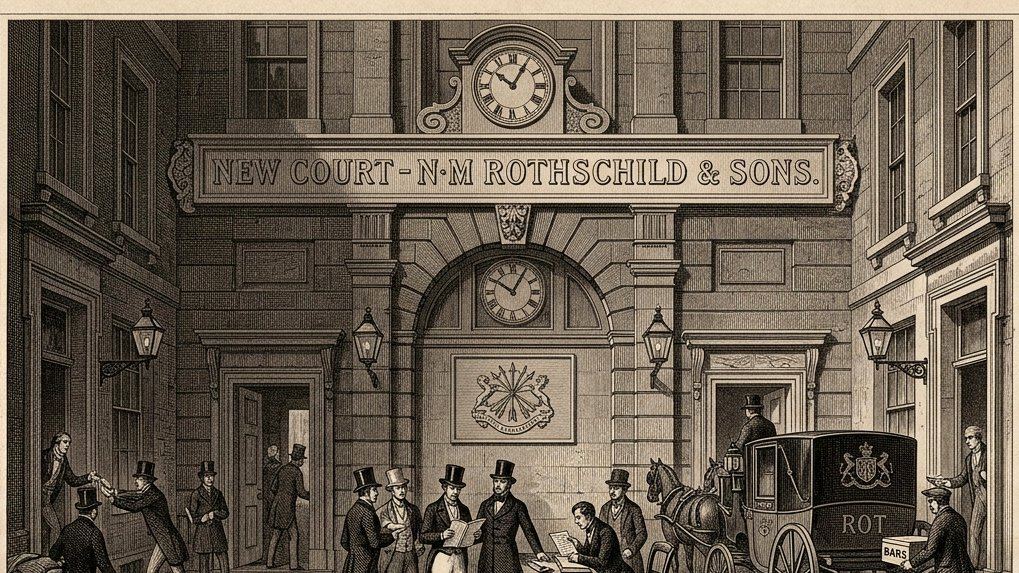
In the hubs of Amsterdam and London the scattered instruments of four millennia were assembled into a single financial system — and the merchant banks turned the oldest asset of all, a trusted name, into the engine of world trade.
The previous essays followed trade finance as a set of separate inventions arising in separate places — the secured loan in Mesopotamia, the priced risk of the bottomry loan in Greece, the remittance instruments of the Islamic world and Tang China, the bill of exchange and the merchant bank in Italy. This essay is about the moment those inventions were gathered into one place and one system. It happened in the seventeenth century in Amsterdam, and then, decisively and for two centuries, in London. And at the heart of it stood an institution built on the most ancient collateral of all: a name that other men would trust.
The hubs assemble the machine
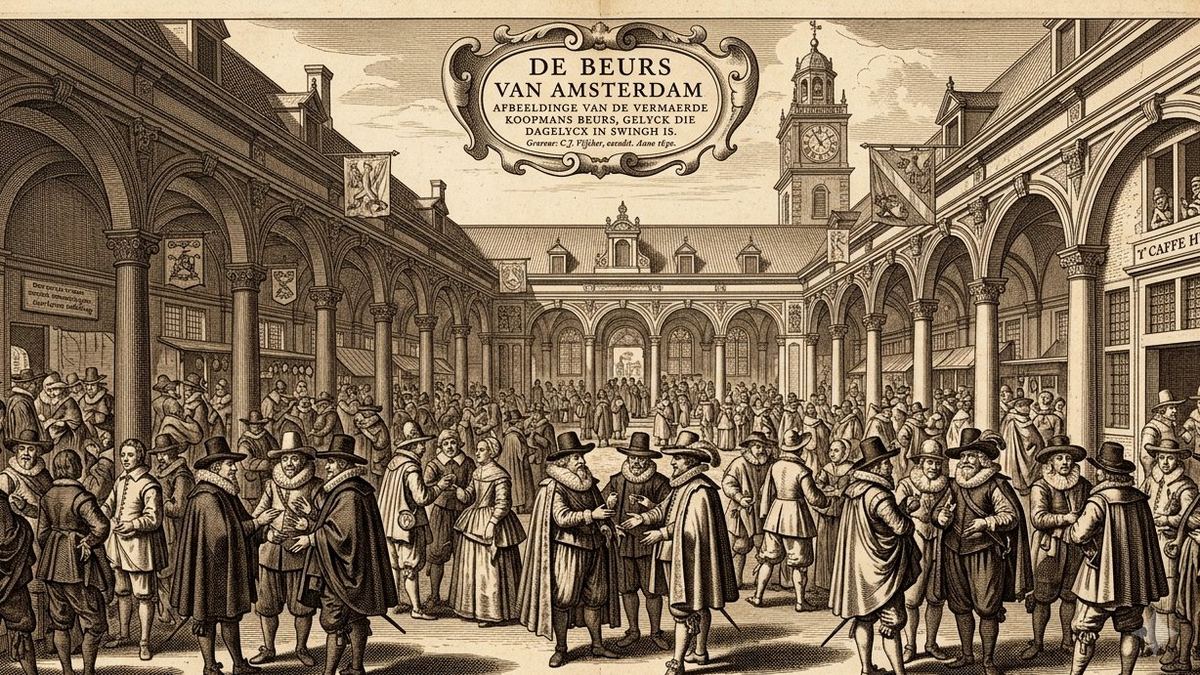
The first assembly took place in Amsterdam, where in a single remarkable century the Dutch built much of the apparatus of modern finance. The Dutch East India Company, chartered in 1602, was the first joint-stock company with freely transferable shares, and the market that grew up to trade those shares became the Amsterdam stock exchange — a permanent, liquid secondary market in ownership itself. The Bank of Amsterdam, founded in 1609, provided standardised settlement that turned the chaos of competing coinages into reliable bank money. Capital could now be raised from the many, traded among them, and settled with confidence.
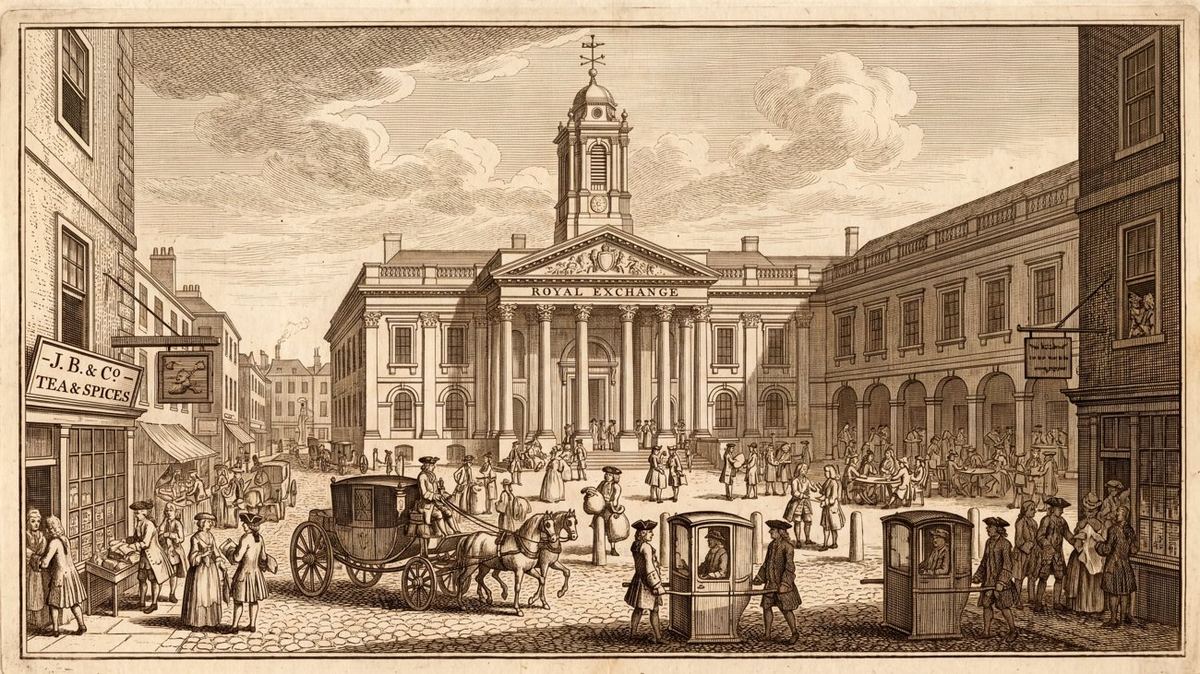
The machine was completed across the North Sea. Marine insurance, that descendant of the risk-sharing embedded in the ancient bottomry loan, found its institutional home in the London coffee house of Edward Lloyd, first recorded in 1688, where underwriters gathered to subscribe portions of a voyage's risk — each writing his name under the line for the share he would carry, and so giving us the word underwriter and the market that became Lloyd's of London. The Bank of England followed in 1694. And the bill of lading matured into a document of title — a paper that legally represented the goods themselves, so that cargo afloat could be sold, pledged, or financed by transferring the document. That last innovation is the quiet hinge on which all modern secured trade lending turns: it is what allows a financier to take security over a cargo he will never see, somewhere in the middle of an ocean. Every warehouse receipt and every set of shipping documents financed today is the heir of the bill of lading's transformation into a thing of legal title.
The merchant bank: banking a name
With the machine assembled, the institution that would run it came into its own — the merchant bank, and the business at its core was the one we traced to medieval Italy: the lending of a name. A merchant bank did not principally take deposits and lend them out, as an ordinary commercial bank did. It lent its credit. A house of unimpeachable standing would accept — write its signature across — a bill of exchange drawn on it by a trading party, and that acceptance, the promise of a great name to pay, transformed the bill into a first-class instrument that could circulate or be discounted for cash anywhere in the City. The merchant who had once traded goods had become a financier whose principal stock-in-trade was his reputation, monetised through the acceptance of bills.
This was the foundation of London's pre-eminence, and its scale before the First World War was staggering: the greater part of world trade was financed by bills drawn on London, an instrument so dominant that contemporaries called it a kind of world currency. The elite houses — the accepting houses — formed a committee whose endorsed paper earned the finest terms at the Bank of England, and their names are the lineage of modern finance: Barings, Rothschild, Schroders, Kleinwort, Hambros. They were, for the most part, family partnerships, living not on the interest spread of a deposit bank but on fees, commissions, and the disciplined deployment of the partners' own capital. The partnership form kept them smaller than the joint-stock banks, but it concentrated the minds wonderfully: when the firm's losses fell on the partners' own fortunes, the partners watched the firm's risks with a particular care.
Barings: the prototype, and the warning
No house shows the model better than Baring Brothers, founded in London in 1762. It began exactly where this whole history would predict — as a trading concern, dealing in commodities on its own account and acting as London agent for overseas merchants, arranging their shipping, insurance, and payments. From serving merchants it was a short and natural step to financing them, by accepting their bills, and the acceptance business became, in the words of the firm's own archive, a mainstay from the eighteenth century well into the twentieth. The merchant had become the banker. By 1818 the house stood so high in the affairs of nations that the French premier, the Duc de Richelieu, is famously said to have named it the sixth great power of Europe, after England, France, Prussia, Austria, and Russia. The line is embellished, but the standing it captures was real: Barings had helped finance the Louisiana Purchase and stood at the centre of sovereign lending across the world.
And then, in 1890, Barings demonstrated the other half of the lesson — the same lesson the Bardi and Peruzzi had taught five centuries earlier, in almost the same words. The house had committed itself enormously to Argentine securities during the South American boom, and when Argentina faltered it found itself holding some eight million pounds of unsellable paper against four million pounds of capital. It was insolvent, and it was large enough that its failure threatened to bring down the London market with it. What followed became the template for every modern bailout. The Governor of the Bank of England, William Lidderdale, judging that a half-measure would not hold the panic, replenished the Bank's gold from France and Russia and assembled a guarantee fund from the whole of the City to stand behind Barings' liabilities. The panic was contained; the firm was reconstituted; the partners' fortunes were liquidated to repay the fund. The system had invented the coordinated lender-of-last-resort rescue, and it had done so to save a house destroyed by precisely the concentration that destroys lenders in every century of this series.
Rothschild: the network as the innovation
If Barings was the prototype of the merchant bank, the house of Rothschild was its apotheosis, and its distinctive contribution was not the acceptance of bills but a structural innovation that turned a family into a financial system. The founder, Mayer Amschel Rothschild, began precisely as our history would expect — a dealer in coins and antiques in the Frankfurt ghetto, who managed the funds of a German prince. His genius lay in what he did with his five sons. He placed them in the five financial capitals of Europe: Amschel in Frankfurt, Salomon in Vienna, Nathan in London, Carl in Naples, James in Paris. Five houses, one family, one balance sheet, in constant correspondence — and able to move capital, intelligence, and opportunity between the great capitals as no single-city rival ever could.
The famous legend — that Nathan made a fortune by trading on early news of Waterloo — is, on the careful evidence of the family's own archive and its leading historian, largely a myth; the documented profit from any such advantage was modest, and the family had in fact bet on a longer war. The real innovation was both more mundane and more profound. With the Prussian loan of 1818, the Rothschilds issued a foreign government's bonds across multiple markets with the interest payable in sterling in London, sparing the British investor the hazards of foreign currency and foreign collection. It was the birth of the modern international bond market, and it grew directly out of the family's roots in moving bullion and arbitraging exchange across their five-city network. For much of the nineteenth century N. M. Rothschild was part of the largest bank in the world and the dominant force in sovereign debt; at its peak the combined Rothschild capital exceeded that of the five largest German joint-stock banks together.
Crucially for our theme, the bond business never severed its roots in commodities and trade. The Rothschilds controlled the mercury essential to refining precious metals, took over the Royal Mint Refinery in London, acquired a controlling interest in the Rio Tinto copper mines, and became the largest shareholders in De Beers. When Disraeli resolved in 1875 to buy the Khedive of Egypt's shares in the Suez Canal for Britain, with Parliament not sitting, he turned to Lionel de Rothschild, whose house advanced the government four million pounds overnight to secure the stake. Bullion dealing, commodity finance, sovereign lending, and the financing of trade were never separate enterprises in the Rothschild conception. They were one business — the business of moving value across distance, time, and risk — observed at different moments and different scales. Which is to say: they were the business this entire series describes.
What the hubs perfected
By the close of the nineteenth century the scattered inventions of four thousand years had been assembled into a coherent global system, with London at its centre and the merchant banks as its engine. The bill of exchange moved value and financed goods; marine insurance and the bill of lading secured the cargo; the joint-stock company and the exchange raised and traded capital; the central bank stood behind the system as lender of last resort; and the great houses lent their names to make the whole apparatus run. At the heart of it sat the oldest idea in this history — that a trusted name, a reputation built over generations and guarded above all else, is a form of capital in itself.
What remained was to standardise this system for a world of many languages and legal codes, and then to watch the great banks retreat from parts of it — leaving a gap that, as the final essay describes, looks remarkably like the opening through which the merchant houses themselves once entered.