
Standardisation and the Gap
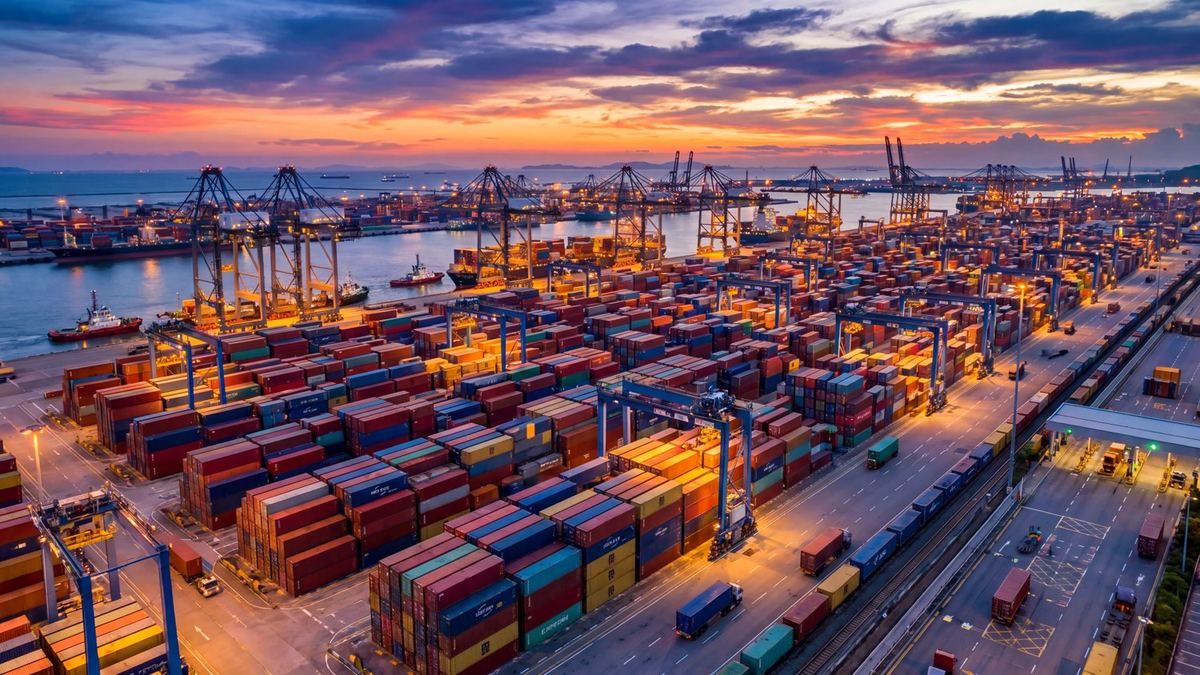
The documentary credit standardised four thousand years of practice for the modern world. Structured commodity finance is the direct heir of the bottomry loan. And a two-and-a-half-trillion-dollar gap has reopened the oldest opportunity in commerce.
The previous five essays carried a single function across four millennia: from the temple lenders of Babylon, through the bottomry loans of Greece and the remittance instruments of the Islamic world and Tang China, to the bill of exchange of Florence and the merchant banks of London. This final essay brings the thread into the present — through the standardisation that turned a patchwork of merchant custom into a global system, into the structured commodity finance that is the bottomry loan's direct descendant, and to the gap in the modern market that has reopened, for a new set of disciplined lenders, the oldest opportunity in commerce.
The documentary credit, and the rulebook
As world trade expanded across more languages, currencies, and legal systems than any single house could master, the central instrument of modern trade finance took its mature form: the documentary letter of credit. The mechanism is the elegant resolution of an ancient problem — how a seller in one country and a buyer in another, who do not know and cannot easily sue one another, can each be made safe. The buyer's bank promises to pay the seller, but only against presentation of the documents that prove the goods have been shipped: the bill of lading, the insurance policy, the invoice. The seller ships against the strength of a bank's promise rather than a stranger's; the buyer pays only against proof of shipment rather than mere assurance. The bank's creditworthiness is substituted for the merchant's, exactly as the accepting houses had substituted their names a century before.
What made the documentary credit work across the whole world was a rulebook. In 1933 the International Chamber of Commerce published the first Uniform Customs and Practice for Documentary Credits — a private codification, agreed among the trading nations, of how these instruments would be interpreted and honoured everywhere. Revised across the decades and still in force in its current form, the UCP is one of the quiet triumphs of commercial self-governance: a set of rules with no treaty and no army behind it, obeyed worldwide because it is useful, that lets a bank in one hemisphere and a merchant in another transact with confidence. It standardised the custom of merchants into the law of trade. To this day the World Trade Organization estimates that some eighty to ninety per cent of world trade relies on trade finance in one form or another — the documentary credit and its relatives remaining, as the bill of exchange once was, the circulatory system of global commerce.

Structured commodity finance: the bottomry loan returns
Within this standardised world, the instrument that most directly inherits the logic of the oldest essays in this series is structured commodity trade finance — and the reader who has followed from the beginning will recognise it on sight. It is short-term, transaction-based lending against physical commodities, repaid not from a borrower's general balance sheet but from the sale proceeds of the very goods it finances. The loan is self-liquidating: it exists only for as long as the cargo is in transit, typically a matter of weeks to a few months, and it extinguishes itself when the goods are sold and the buyer pays. It is secured against the cargo through the documents of title and controlled through the payment flow, so that the money comes back through a channel the financier can see.
This is the bottomry loan of ancient Athens, refined by four thousand years of practice. The lender funds an identified cargo with an identified buyer behind it; the lender's recovery is tied to that cargo; the rate prices the risk the cargo carries. Stack these short, self-liquidating exposures end to end and the result is the rare kind of credit book that continuously re-underwrites itself rather than accumulating long-dated, mark-to-market fragility. The discipline that governs it is the discipline this series has traced from the beginning: tie the loan to identifiable goods, secure your recovery against them, price the peril honestly, control the payment, and never let one cargo, one counterparty, or one corridor grow large enough to ruin you. Hammurabi's scribes would recognise the rules. The Athenians who spread their loans across many hulls would recognise them. The Medici, who built firewalls between their branches, would recognise them best of all.

The gap
Which brings us to the present opportunity, and it has a shape this history makes immediately familiar. In every era we have examined, the established institutions eventually retreated from some part of the trade they had once dominated — and into the space they left stepped a new set of financiers willing to do the patient, secured, unglamorous work. It is happening again, and it can be measured. The global trade finance gap — the difference between the trade financing that is requested and the trade financing that is approved — reached a record two and a half trillion US dollars in 2022, and the most recent surveys find it has stayed there, equal to roughly a tenth of all the trade in the world. That is the scale of the demand for trade finance that the banking system declines to meet.
The reasons are structural rather than cyclical, which is what makes the gap durable. Successive tightenings of bank capital rules have made short-tenor, self-liquidating trade lending expensive for banks to hold against the capital it consumes; compliance and know-your-customer costs fall heavily on transactions that are individually modest; and a run of high-profile commodity-finance defaults prompted several of the largest banks to withdraw from precisely the business their predecessors built. The retreat is concentrated where it always is — not on the largest and most bankable names, who are over-served, but on the mid-sized traders and producers a tier below them, the firms whose trade is real and whose security is good but whose size does not fit the capital arithmetic of a global bank. This is the same tier the Sogdian networks served, and the piaohao, and the accepting houses in their day.
Into this gap have stepped the specialist non-bank financiers — the trade finance funds, the private credit vehicles, the family offices — providing liquidity against real goods in exchange for senior secured positions and a return that prices the risk honestly. They are doing, in substance, exactly what the merchant houses of London did when they entered the financing of a trade the deposit banks would not touch, and what the temple lenders of Babylon did at the very beginning: meeting a real demand for credit against goods, with discipline, where the established institutions would not.
The function endures
It is tempting to read four thousand years of this history as a story of progress — from clay tablet to documentary credit, from temple to fund, each age improving on the last. It is more accurately read as a story of continuity. The instruments are inventions, and they have multiplied and refined themselves across the millennia. The function beneath them has not changed at all. Every institution in this series, in every civilisation it touched, existed to do the same three things: to bridge the gap in time between the shipment of goods and the payment for them, to transfer and price the risk of value moving across distance, and to substitute trusted paper for the dangerous transport of treasure itself.
And the houses that did this well shared a single discipline, across every century we have examined. They tied repayment to identifiable goods whose sale extinguished the debt. They secured their recovery against those goods. They priced the peril honestly. And they refused, above all, to let any one exposure grow large enough to destroy them — the discipline the Bardi and Peruzzi forgot before a king, the discipline Barings forgot before a boom, the discipline the Medici built into the very architecture of their bank. The houses that held to it endured for generations. The houses that abandoned it failed, and they failed in the same way in every age.
That is the lesson of the long continuity, and it is worth stating plainly at the close. Trade finance is not safe because it is old, and it is not safe because it is secured; it is safe only to the degree that it is practised with discipline. But practised with discipline, it is among the most durable functions in all of commerce — older than coinage, older than banking, older than the company — and it endures because the need it serves is permanent. Goods will always have to move faster than money can safely follow. Someone will always have to bridge the gap. The instruments will go on changing. The discipline, and the function it serves, will not.